
Chinese Kung Fu, also known as Wushu, is one of the most profound and influential martial arts traditions in human history. With origins stretching back more than five thousand years, Kung Fu is not merely a method of combat, but a complete cultural system that integrates philosophy, medicine, aesthetics, spirituality, and performance. It represents the Chinese understanding of life, nature, and the human spirit.

Origins Rooted in Ancient Civilization
The earliest forms of Chinese martial arts emerged from humanity’s need for survival. In ancient China, people developed fighting techniques to protect themselves from wild animals, natural disasters, and warfare. Over time, these practical skills evolved into structured systems, passed down through families, clans, and military institutions.
During China’s long dynastic history, Kung Fu became closely connected with the nation’s philosophy and ethics. Confucianism emphasized discipline, respect, and moral conduct. Taoism promoted balance, flexibility, and harmony with nature. Buddhism, especially through the Shaolin Temple, introduced meditation and spiritual cultivation. Together, these schools of thought shaped Kung Fu into a path of both physical mastery and inner growth.
Shaolin Temple and the Birth of Martial Legend
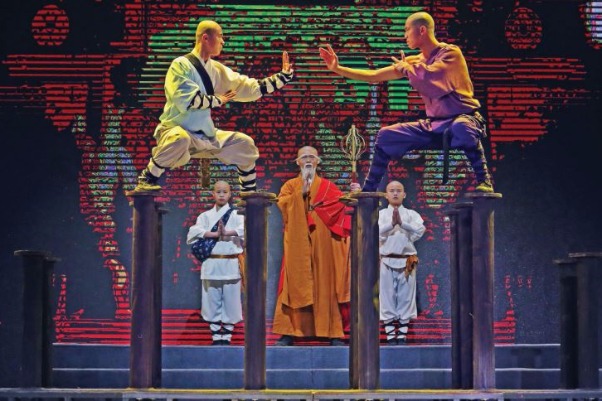
No discussion of Chinese Kung Fu is complete without mentioning the Shaolin Temple, located on Mount Song in Henan Province. Founded over 1,500 years ago, Shaolin became the cradle of Chinese martial arts. Monks combined meditation, breathing techniques, and combat training to strengthen both body and mind.
Shaolin Kung Fu is famous for its explosive power, precise movements, and deep internal energy. The monks believed that martial training was a form of spiritual practice — every strike, step, and breath was a step toward enlightenment. Over centuries, Shaolin Kung Fu gave rise to countless styles and legends, influencing martial traditions across China and beyond.
Diversity of Styles and Techniques
Chinese Kung Fu is not a single style but a vast universe of systems, often categorized into Northern and Southern schools, internal and external styles, and hard and soft techniques.
- Northern styles emphasize long-range attacks, high kicks, and dynamic movements.
- Southern styles focus on strong stances, close combat, and powerful hand techniques.
- Internal styles, such as Tai Chi, stress breath control, balance, and internal energy (Qi).
- External styles, like Shaolin, highlight strength, speed, and physical conditioning.
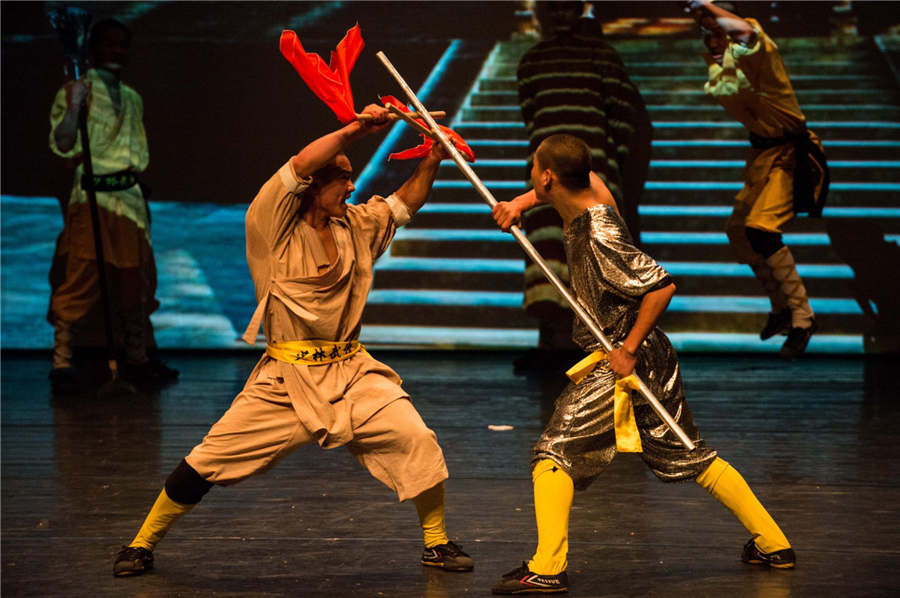
Weapons training is another essential element of Kung Fu. The sword, spear, staff, saber, and flexible weapons are not just tools of combat but extensions of the body. Their movements demonstrate rhythm, precision, and artistic beauty, often resembling dance rather than fighting.
Kung Fu as a Language of Philosophy
At its core, Chinese Kung Fu is a philosophy in motion. It teaches practitioners to remain calm under pressure, to yield before striking, and to use intelligence over brute force. The concept of Yin and Yang — softness and hardness, stillness and motion — is reflected in every technique.
Animal-inspired styles such as Tiger, Crane, Snake, Leopard, and Dragon embody different spiritual qualities. The tiger symbolizes strength and courage, the crane represents elegance and balance, the snake emphasizes flexibility and precision, while the dragon stands for wisdom and inner power. Through these forms, Kung Fu becomes a symbolic language that expresses humanity’s connection to nature.

From Martial Art to Stage Performance
In modern times, Chinese Kung Fu has transcended the battlefield and training hall to become a powerful form of stage art. Live performances combine authentic martial techniques with theatrical storytelling, music, lighting, and choreography.
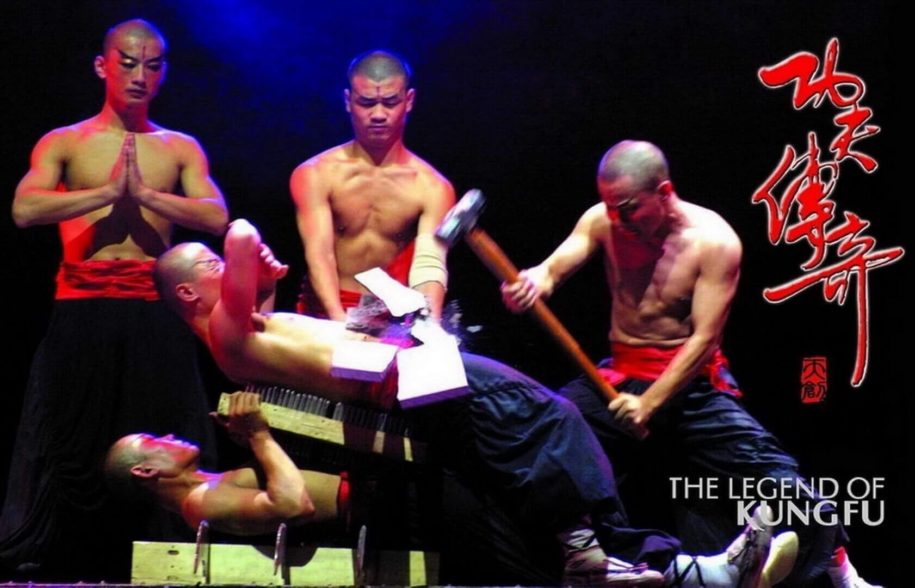
Shows such as The Legend of Kung Fu transform traditional training into breathtaking visual experiences. Real martial artists demonstrate genuine Kung Fu skills — iron body techniques, weapon mastery, acrobatics, and synchronized group forms — while telling stories of discipline, sacrifice, loyalty, and perseverance.
These performances are not simulations or special effects. What audiences witness on stage is real Kung Fu, forged through years of rigorous training and unwavering dedication.
Global Influence and Cultural Legacy
Chinese Kung Fu has had a profound impact on global culture. Through classic films, modern cinema, and international competitions, Kung Fu has inspired generations around the world. Legends such as Bruce Lee, Jet Li, and Jackie Chan introduced Chinese martial arts to international audiences, blending tradition with modern storytelling.
Today, Kung Fu schools exist in nearly every country, and millions of practitioners continue to study this ancient art. Yet beyond physical skill, Kung Fu’s greatest legacy lies in its values: respect, patience, resilience, and self-discipline.
A Timeless Legend
Chinese Kung Fu is more than a tradition — it is a living legend. It connects the past with the present, the body with the spirit, and culture with performance. Whether practiced in a quiet training hall, a sacred temple, or displayed on a grand stage such as Red Theatre Beijing, Kung Fu continues to tell its timeless story.
It reminds us that true strength comes not from violence, but from control. Not from speed alone, but from balance. And not from victory over others, but from mastery of oneself.
In the legendary world of Chinese Kung Fu, every movement carries history, every breath carries meaning, and every performance carries the soul of a civilization.



Leave a Reply